
If you are planning to replace or install new windows in Central or Coastal Florida, you’ve likely run into a wall of conflicting advice. On local online forums or standing at the curb, homeowners constantly debate whether you can save money by installing standard non-impact windows if you already own shutters, or if you can bypass strict building codes entirely by replacing just a few windows at a time.
The short answer is that Florida building regulations are heavily policed, and cutting corners usually results in failed code inspections or voided home insurance policies. Worse yet, the adoption of ill-advised “loophole” strategies can compromise your home’s structural integrity and lead to greater troubles.
Florida Window Building Codes: Do You Legally Need Impact-Rated Glass?
Florida Building Code does not explicitly require every home to have impact windows specifically. Instead, the codes dictate Florida homes in windborne debris regions must protect exterior openings using one of two approved methods: impact-resistant windows or a permitted hurricane shutter system.
Without an approved shutter system, any newly installed or replacement window must be impact-rated itself to meet applicable wind and debris-protection laws and building codes, as determined by the wind zone the home is located. Your local building department can assist you in determining what DP rating you need.

The 25% Window Replacement “Loophole" Myth: Can You Bypass the Code by Replacing Windows in Phases?
One of the most common topics discussed by Florida homeowners is the “25% Window Rule” (FBC-B Section 707.4). Many people mistakenly believe this means they can replace a fewer than one quarter of their home’s windows every calendar year with cheap, non-impact glass to avoid pull-permits, modern code compliance, and expense.
How Florida’s 25% Window Rule Is Actually Calculated
- It is measured by square footage, not the number of windows. The 25% threshold applies to the aggregate surface area of all glazed openings (glass) in your home, including standard windows, large sliding glass doors, and patio doors. Replacing one massive triple-panel slider can easily wipe out your entire 25% allowance by itself.
- It operates on a rolling 12-month window. This is not a calendar year loophole that resets January 1st. Local building departments track permitting history on a rolling 365-day scale.
- What happens if you cross the line: If you replace more than 25% of your home's total glass area within a 12-month period, the exception is voided. The Florida Building Code dictates that every single newly replaced window must be brought fully up to modern structural wind-load and impact standards. Mixing and matching non-compliant windows across a short timeline will result in a code violation and forced structural removal.
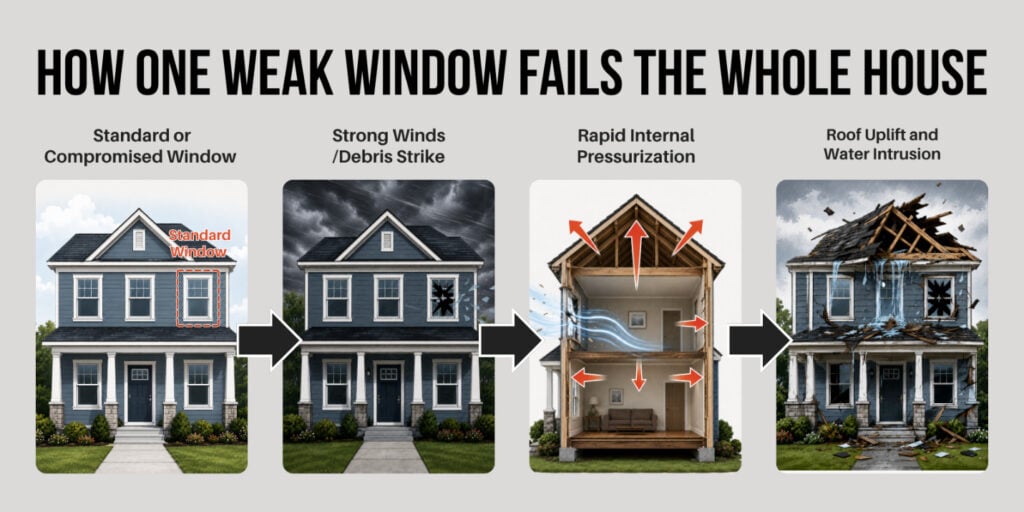
The Structural Risk: Why Leaving One Weak Window Fails the Whole House
Understanding Florida Window Code Requirements and Long-Term Value
Replacing your home’s windows should not feel like navigating a legal or financial minefield. With the right guidance, you can understand what the Florida Building Code requires, how local permitting affects your project, and which pricing/payment option makes the most sense for budget.
At Janney, we believe homeowners deserve clear answers before making a major investment. Our team takes the time to evaluate your existing windows, explain the applicable code requirements, and help you compare options without pressure or confusing shortcuts. The goal is not simply to replace glass. It is to help you make an informed decision that protects your home, supports long-term value, and gives you greater confidence when severe weather approaches.
Before replacing windows in phases or assuming an exception applies, schedule a consultation with Janney Roofing & Windows. We will help you understand your home’s specific requirements, review available payment options, and create a clear path forward with no surprises.